

Tooth pain rarely arrives at a convenient time. When it strikes on a weekend, a public holiday, or late at night, it is natural to wonder whether heading to a hospital emergency room is the right call.
The short answer is: it depends on what is happening. For some dental situations, a hospital is the right first stop. For most, an emergency dentist will be able to provide faster, more targeted care. Knowing the difference can save time, reduce discomfort, and in some situations, save a tooth.
Quick Overview
- Going to the emergency room for tooth pain is possible, but hospitals have significant limits on the dental care they can provide
- This question may apply to anyone experiencing severe tooth pain, facial swelling, dental trauma, or a dental emergency outside regular clinic hours
- Hospitals can manage pain, prescribe antibiotics, and stabilise serious situations, but most dental treatment still needs to be completed by a dentist
- What influences where you should go depends on the type and severity of your symptoms
- The sections below outline when a hospital is appropriate, when an emergency dentist is the better option, and what to do in the meantime
What Can a Hospital Emergency Room Actually Do for Tooth Pain?
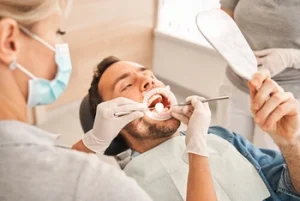 Hospital emergency departments can help when tooth pain is connected to a life-threatening situation. They are equipped to manage severe infections that have spread beyond the tooth, control uncontrolled bleeding, provide intravenous antibiotics, and address facial swelling that is affecting breathing or swallowing.
What hospitals generally cannot do is provide comprehensive dental treatment. Most emergency departments do not have a dentist on staff. Pain relief and antibiotics can manage an acute infection temporarily, but they cannot resolve the underlying cause. A root canal, a cavity filling, re-implanting a knocked-out tooth, and fracture repair all require a dentist.
So if you go to a hospital for a toothache, you are likely to leave with temporary relief rather than a resolution. You will still need to see a dentist to address the underlying cause.
When Should You Go Straight to a Hospital?
Some dental situations are genuine medical emergencies that warrant going directly to an emergency department. These include:
- Facial swelling affecting your airway. If swelling is making it difficult to breathe or swallow, this requires immediate hospital care. An infection that has spread to the neck or throat can become life-threatening.
- Uncontrolled bleeding. If bleeding from the mouth does not stop after applying firm, sustained pressure, go to a hospital.
- Jaw fractures or significant facial trauma. Sports accidents, falls, or impacts that result in a suspected jaw fracture or severe facial injury need assessment at a hospital emergency department.
- Fever combined with spreading facial swelling. This combination can indicate a rapidly spreading infection that requires hospital-level treatment, including intravenous antibiotics.
- Difficulty opening your mouth. Severe trismus (limited jaw movement) alongside swelling and fever may signal a serious deep-space infection.
When Is an Emergency Dentist the Right Choice?
For most dental emergencies, an emergency dentist is the appropriate first call. A dentist can diagnose the source of the problem, provide targeted treatment, and address the issue rather than managing symptoms temporarily.
Situations that call for an emergency dentist include:
- Severe toothache. Pain that is intense, constant, or keeping you awake is a signal that something needs assessment. Tooth pain can stem from decay, infection, or a broken tooth. A dentist can identify the cause and begin treatment.
- Tooth abscess. A dental abscess will not resolve on its own. Antibiotics alone do not eliminate the source of the infection. A dentist can drain the abscess and treat the affected tooth directly.
- Knocked-out adult tooth. Every minute a tooth is outside the socket, the less chance it has of surviving. Prompt care gives the tooth its best chance. Aim to reach a dentist within 30 minutes. Keep the tooth moist in milk or your own saliva and handle it by the crown only, not the root.
- Cracked or fractured tooth. A fracture that exposes the nerve will cause significant pain and can lead to infection if left untreated.
- Lost filling or broken restoration. An exposed cavity can be painful and is vulnerable to further damage or decay.
- Chipped teeth with sharp edges. Sharp edges can lacerate soft tissue in the mouth and may indicate more serious damage.
- Dental trauma from sports accidents. Any injury to the teeth or mouth from sport or impact should be assessed promptly, even if the tooth appears intact.
Can a Tooth Infection Spread if Left Untreated?
Yes. A tooth infection that is not treated can spread beyond the tooth and jaw. A dental abscess left without care can progress to airway obstruction, sepsis, and, in rare cases, life-threatening outcomes.
This is why a dental abscess is considered urgent. Pain that has settled does not necessarily mean the infection has cleared. An abscess can rupture, temporarily relieving pressure while the infection remains and continues to spread.
If you have throbbing pain that radiates to the jaw, ear, or neck, facial swelling, fever, or a bad taste in the mouth, seek dental care promptly rather than waiting to see if symptoms resolve.
A Considered Approach to Dental Emergencies in Adelaide
 Most tooth pain will not resolve without dental treatment. Whether the cause is an abscess, a cracked tooth, trauma, or a lost filling, the underlying problem needs to be assessed and addressed by a dentist.
Hospitals serve an important role when a dental situation becomes a medical emergency. For the majority of dental emergencies that arise, however, an emergency dentist is better placed to provide the care you need.
We are available from 7 am to 9 pm, seven days a week, including weekends and public holidays. If you are experiencing tooth pain or a dental emergency, call us on (08) 7078 8263 or book an appointment online.
Note: Any surgical or invasive procedure carries risks. Before proceeding, you should seek a second opinion from an appropriately qualified health practitioner.
Frequently Asked Questions
What counts as a dental emergency that needs a hospital?
Go to a hospital if you have facial swelling that is affecting your ability to breathe or swallow, uncontrolled bleeding from the mouth that does not stop with pressure, a suspected jaw fracture, or a fever combined with rapidly spreading facial swelling. These situations require the level of care that a hospital emergency department provides.
What should I do with a knocked-out tooth?
Pick the tooth up by the crown, not the root. If it is dirty, rinse it briefly in warm water without scrubbing. Try to reinsert it into the socket if possible, or store it in milk or your own saliva. Seek dental care within 30 minutes if possible. The sooner the tooth is seen by a dentist, the better the chance of saving it. Individual outcomes vary depending on the circumstances of the injury.
References
Australian Dental Association. (n.d.). ‘3 Reasons You May Have A Toothache’. Teeth.org.au. St Leonards, NSW: Australian Dental Association. https://www.teeth.org.au/toothache
Better Health Channel, Department of Health Victoria. (2026). ‘Dental injuries: Knocked out, chipped or cracked teeth’. Better Health Channel, 4 August. Victoria: Department of Health Victoria. https://www.betterhealth.vic.gov.au/health/conditionsandtreatments/dental-injuries-tooth-loss
Healthdirect Australia. (2025). ‘Tooth abscess’. Healthdirect Australia, June. Australia: Healthdirect Australia. https://www.healthdirect.gov.au/tooth-abscess