

Unbearable pain after teeth whitening can arrive without warning. It might be a sudden jolt through your front teeth, a deep ache that makes chewing feel risky, or a sharp pain from a sip of water you would normally barely notice. For some, it starts within hours of the whitening process. For others, it builds overnight and makes sleep hard to come by.
Pain like this raises an obvious question: is it simply the price of a brighter smile, or has something gone wrong? Either can be true, and the answer shapes what you should do next. It also helps to know when prompt emergency dental care is worth seeking rather than waiting it out.
Quick Overview
- Pain after whitening is usually a form of tooth sensitivity, which develops when whitening ingredients reach the inner layers of the tooth.
- It may affect anyone using peroxide-based whitening, and teeth that were already sensitive may be more likely to react.
- In most cases, the discomfort is temporary and can be eased with simple changes at home, although some situations need a closer look.
- Gel strength, how long the gel stays on the teeth, tray design and the condition of your gums may all influence how intense it feels.
- How long the pain lasts, whether it lingers after a trigger, and any changes to the gums help guide the next steps.
Below, we explain why whitening can hurt this much, what eases it and when the pain points to something that needs attention.
Why Can Teeth Whitening Hurt So Much?
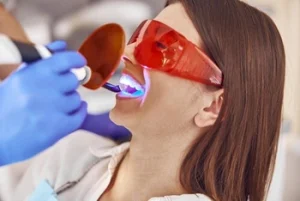 Whitening hurts because the active ingredient travels through the tooth to reach the stains, and it can irritate the nerve along the way. The result is temporary inflammation inside the tooth that makes it overreact to ordinary triggers.
Most whitening gels contain hydrogen peroxide or carbamide peroxide, which releases hydrogen peroxide once it meets the teeth. These bleaching agents are small enough to pass through tooth enamel and into the dentine beneath, which is how they break down stains sitting below the tooth surface.
The same path brings them close to the pulp, the soft core of each tooth that houses its nerve and blood supply. Once there, they can provoke a short-lived inflammatory response. The nerve becomes more reactive, so a breath of cold air or a mouthful of cold foods may produce pain far out of proportion to the trigger.
What Affects How Much Teeth Whitening Hurts?
Not every whitening treatment causes the same level of discomfort. Peroxide concentration, how long the gel stays on the teeth, tray design, existing sensitivity and gum recession may all affect whitening sensitivity, including how often it appears and how intense it becomes.
In practical terms, these factors tend to show up as:
- Gel strength: Higher concentrations of whitening agents deliver more peroxide to the tooth at once, which is linked with a higher risk of sensitivity.
- Wear time: Longer exposure to the gel is associated with more sensitivity, so leaving it on longer than directed may make the pain worse.
- Tray fit: Ill-fitting trays may let excess gel spread onto the gums, adding gum irritation to the tooth pain.
- Enamel and gum health: Thin enamel offers less protection, and receding gums expose root surfaces that have no enamel covering at all.
- Starting point: Teeth that already react to hot or cold foods may be more likely to react once whitening begins.
Is It Temporary Sensitivity or a Sign of Something Else?
Most whitening discomfort is temporary sensitivity. Pain that lingers after a trigger, keeps you awake, or comes with swelling or gum burns may point to a different problem, and it is worth having checked.
Sensitivity often shows up as a short, sharp pain when teeth feel sensitive to hot and cold drinks, cold air or sudden temperature changes. This type of pain usually fades once the trigger is removed.
The intensity can still be confronting. In some cases, sensitivity can become very severe, and gels used incorrectly may burn the gums or lips and cause ulcers.
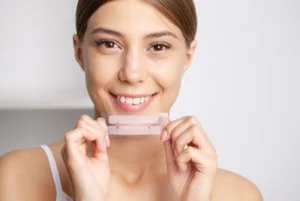 It may be time to seek professional help from our team if you notice:
- Tooth pain that continues well after the hot or cold trigger has gone, which can be a sign of decay.
- Severe pain that keeps you awake at night.
- Burns, sores or ulcers on the gums, lips or tongue.
- Swelling in the gum or face.
- A visible crack, a chipped edge or a filling that feels rough or loose.
In these situations, your dentist may test individual teeth and take an X-ray to look for cracks, decay or leaking fillings that may be adding to the pain.
How to Ease Sensitive Teeth After Whitening
Small changes at home can take the edge off while the nerve settles. These steps suit temporary sensitivity, and they do not replace an assessment when warning signs appear.
- Use a desensitising toothpaste. A sensitive toothpaste containing potassium nitrate or stannous fluoride may calm the nerve or block the tiny channels in dentine.
- Brush gently. A soft-bristled toothbrush and a gentle toothpaste reduce friction at the gum line. Keep brushing twice a day with fluoride toothpaste to protect tooth enamel.
- Keep food and drink mild. While your teeth are sensitive, choose room temperature beverages, avoid hot coffee and cold drinks, and go easy on acidic foods and sugary foods, as sweet foods can also set off twinges.
- Consider pain relief. Over-the-counter pain relief may ease discomfort when taken according to the packet directions.
- Ask about in-chair options. Your dentist may apply fluoride gels or desensitising gels to help the teeth settle with less sensitivity after the whitening procedure.
Planning Future Whitening With Less Sensitivity
If teeth whitening treatments have hurt before, a different approach next time may reduce the risk. Whitening is not suitable for everyone, including those with sensitive teeth, gum disease, cracks, holes or other untreated dental problems.
A check-up before starting gives a dental professional the chance to treat these issues first. Only registered dental professionals can use whitening gels containing more than 6% hydrogen peroxide, so professional whitening treatments can be matched to your tooth sensitivity, enamel and gums rather than relying on teeth whitening products bought online.
Whitening results also vary. Stains inside the tooth respond differently from surface stains, and individual outcomes depend on the cause of the discolouration.
 Getting Relief When Whitening Pain Will Not Settle
 Getting Relief When Whitening Pain Will Not Settle
Severe pain that stops you eating or sleeping deserves attention, especially when it may be hiding a crack, decay or a chemical burn to the gums. Our dentists can examine the affected teeth, check the soft tissue for irritation and recommend ways to calm the nerve based on what they find. Any treatment depends on your individual situation. Our dental clinic is open from 7 am to 9 pm, seven days a week, including public holidays, so you do not have to wait out the pain until a weekday. If whitening has made your teeth hurt, please call us on (08) 7078 8263.
Frequently Asked Questions
How long does pain after teeth whitening last?
Whitening sensitivity is usually temporary and tends to peak within a few days of treatment. If sensitivity or gum irritation continues for more than a day or two, it is worth having our team check your teeth. Ongoing discomfort can have other causes, such as decay or enamel wear from overusing whitening products.
Can I keep whitening if my teeth hurt?
It is usually wiser to pause until the pain has fully settled than to push through it. If the pain returns as soon as you restart, stop again and call us, so we can look at why your teeth are reacting before you continue.
Should I take painkillers before whitening to prevent sensitivity?
Taking anti-inflammatory tablets before whitening does not appear to prevent sensitivity or meaningfully reduce how strong it feels. Desensitising agents containing potassium nitrate, applied to the teeth, have shown small reductions in sensitivity levels.
Do whitening strips and toothpastes cause sensitivity too?
Yes, they can. Any product containing peroxide, including over-the-counter whitening strips, has the potential to cause sensitivity, and whitening toothpastes can also make teeth sensitive. Because these bleaching products are used without a dental assessment, it is worth having us check your teeth before you start.
Will desensitising products affect my whitening results?
Generally, they do not. Desensitising agents used alongside whitening have not been found to consistently reduce colour change, so easing sensitivity does not usually mean giving up the shade you were aiming for. Results still vary from one patient to another.
Note: Any surgical or invasive procedure carries risks. Before proceeding, you should seek a second opinion from an appropriately qualified health practitioner.
References
Kurmanalina, M.A., Tankibayeva, Z.G., Sagimbayeva, T.B., Ismagulova, E.K., Messova, A.M. and Tamadon, A. (2026). ‘Interventions for bleaching-induced tooth sensitivity: an umbrella review’. Frontiers in Oral Health, 7, 1927686, 21 September. https://www.frontiersin.org/journals/oral-health/articles/10.3389/froh.2026.1927686/full
SA Dental. (n.d.). ‘Teeth whitening’. SA Dental, Government of South Australia. https://www.dental.sa.gov.au/advice/teeth-whitening
Healthdirect Australia. (2025). ‘Teeth whitening’. Healthdirect Australia, last reviewed February 2025. https://www.healthdirect.gov.au/procedures/dental-procedures-and-appliances/teeth-whitening
Australian Dental Association. (n.d.). ‘Sensitive teeth’. Teeth.org.au. https://teeth.org.au/sensitive-teeth